Quick answer
Some shedding, such as after childbirth, often improves without hair-loss medicine. Patchy bald areas, a sudden change, a painful or scaly scalp, or shedding that comes with other new symptoms need an in-person dermatologist. This guide explains each pattern and what to expect at a visit.
Losing some hair every day is normal. Many people notice more hair in the shower, on a brush or on a pillow and wonder whether it is a problem. This guide explains the common patterns, when a dermatologist is worth seeing, and what to expect at that visit.
Shedding is not the same as hair loss
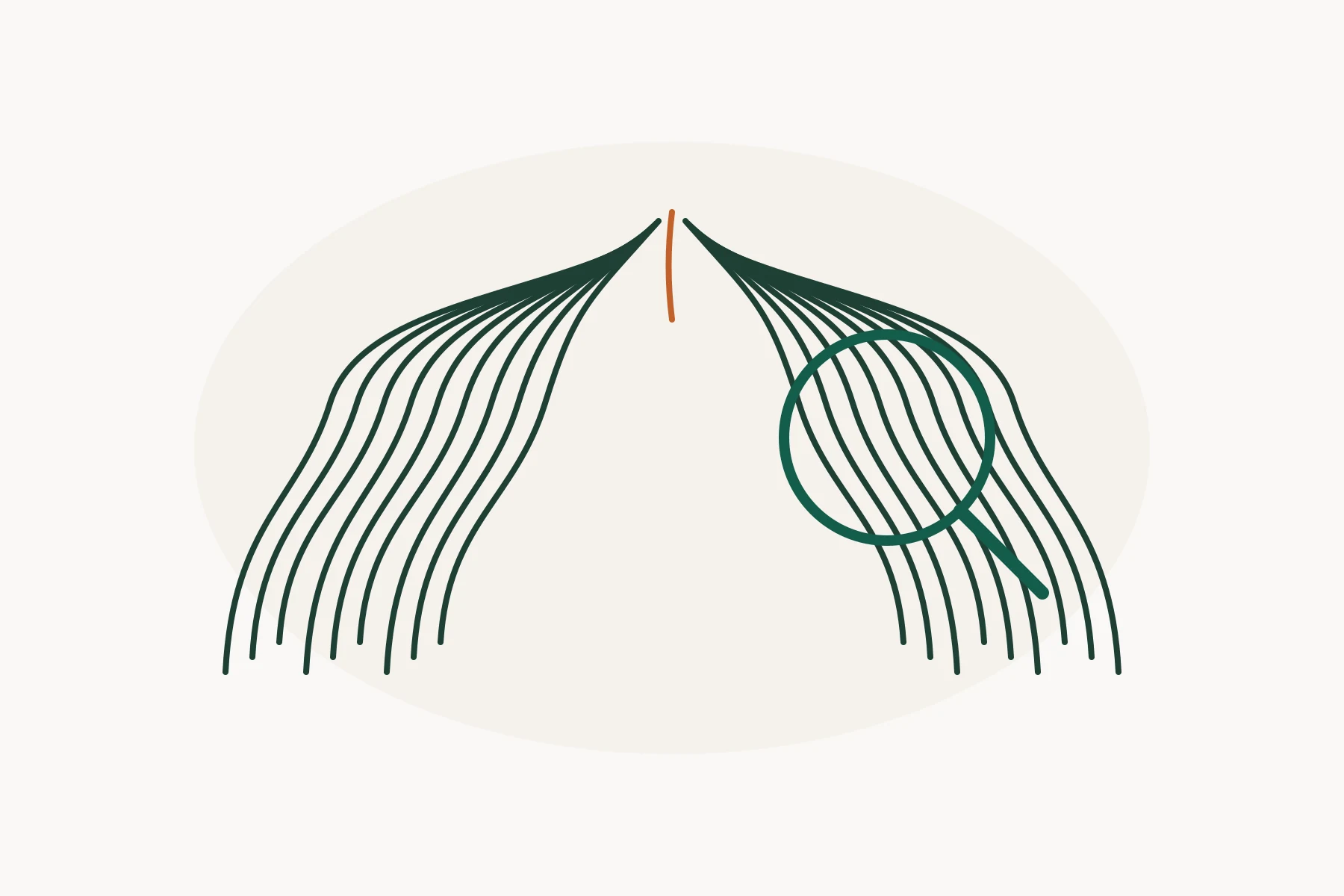
Hair grows in cycles, and it is normal to shed 50 to 100 hairs a day (AAD: hair loss or hair shedding). Hair loss that needs attention is usually a change from your own normal: more shedding than before, a wider parting, a thinning crown or a hairline that is receding. Compare photos of your hair taken a few months apart, because memory is unreliable for this.
Dermatologists diagnose hair loss by looking at your history and examining your scalp, and they order tests only when there is a reason to (American Academy of Dermatology: diagnosis and treatment of hair loss).
Postpartum shedding
Many women notice heavy shedding a few months after giving birth. This often improves without any hair-loss medicine (AAD: hair loss in new mothers). The AAD says excessive shedding after a stressor such as childbirth is temporary, and that within six to nine months the hair tends to regain its normal fullness (AAD). If shedding continues beyond that, see a dermatologist. A dermatologist can reassure you and check whether anything else is contributing. Do not start a hair-loss treatment on your own during this period without asking your doctor.
Patchy hair loss
Round or patchy bald areas, especially if they appear quickly, need their own assessment. This pattern is different from the gradual thinning that is more common in androgenetic hair loss. A dermatologist will examine the scalp and decide whether a referral or a different treatment pathway is needed (AAD: alopecia areata treatment). Do not assume a general hair-fall plan is right for patchy loss.
PCOS and hormonal concerns
Hair concerns can be linked to hormonal conditions such as PCOS. In these cases the dermatologist looks at the wider picture, including cycles, skin and any other symptoms. The international PCOS guideline recommends assessing PCOS more broadly than hair alone, and the evidence for antiandrogen treatment of hair loss in PCOS is limited, so a single product should not be expected to treat every symptom (2023 international PCOS guideline summary). If you are planning pregnancy or are pregnant, speak to your doctor before starting any new treatment.
Blood tests and other investigations
Blood tests are not needed for everyone. A dermatologist will order tests when your history or examination suggests a reason to do so. If tests are suggested, it is reasonable to ask what each one is for.
When to see a dermatologist in person
Book an in-person appointment with a dermatologist if you notice any of the following. The list is not exhaustive: if something else about your hair or scalp worries you, a dermatologist can tell you whether it needs an in-person visit.
- patchy bald areas, or hair loss that appears suddenly
- scalp pain, burning, redness, scaling or pus
- rapid thinning over a few weeks
- hair loss together with other new symptoms, such as tiredness, weight change or changes to your periods
- hair loss that keeps getting worse over several months, or any change that is causing you real concern and that you want examined in person
What to expect at the visit
A dermatologist will ask about when the shedding started, your family history, medicines you take and any recent illness or pregnancy. They will examine your scalp, and may ask for photos. Bring any previous reports. Expect a plan that explains what is likely to be happening and what the next step is.
The bottom line
Some shedding, such as postpartum shedding, often improves without hair-loss medicine. Patchy loss, sudden change and shedding that comes with other symptoms are worth a proper assessment. A dermatologist can tell you which group your concern belongs to, and what, if anything, needs treatment.
If you do not have any of the signs above and want a dermatologist's view on whether an in-person visit is needed, you can begin an Elevren hair assessment. Starting costs nothing, and you see the dermatologist's recommendation and the price before you decide to pay. If you have any of the signs above, please see a dermatologist in person first. Read how the assessment works and our privacy policy before you share any photos.
Related reading
- Onion juice and hair oils: what the evidence says
- Itchy scalp or extra shedding after starting treatment
- Hair loss treatment cost in Pakistan: what you pay for
This article is general information. It is not a substitute for a consultation with a qualified dermatologist.